Following an open call earlier this year, SSW and Counterflows Festival are delighted to announce the selection of the following artists for the SSW x Counterflows Caregivers Residency 2026/27:
Alberta Whittle
Marie-Claire Lacey
Maud Hewlings
Rosie Priest
These four fully funded residencies are made possible with the generous support of the William Grant Foundation and Creative Scotland.
The selection panel included previous SSW x Counterflows Caregivers Residency artists Alicia Matthews and Shiori Usui, as well as Sam Trotman from SSW and Alasdair Campbell & Fielding Hope from Counterflows Festival.
While on this residency:
Alberta Whittle plans to expand technical knowledge in metalwork and ceramics. ‘Undertaking a residency through SSW and Counterflows would create a supportive structure from which to recalibrate and explore my practice with greater confidence and ambition. I have been working with clay and metal in more ad hoc ways such as salt dyeing with found metal or shaping clay into small sculptures. I want to push these ideas further through a prolonged period of exploration with the experienced technical team at SSW.’
Marie-Claire Lacey will be developing a series of ceramic works exploring ideas of overwhelm, care and containment. ‘I am particularly interested in making vessels that attempt to hold more than they are capable of containing — forms that overflow, collapse, spill or gradually disintegrate under the pressure of what they are trying to hold.
I’ll experiment with clay in both its transient, malleable state and its fired, permanent form, exploring what happens when these changing forms are fixed at different points in their transformation. Alongside the ceramics, I’ll continue developing my use of text and sound as alternative ways of exploring time, repetition and the experience of overwhelm.’
Maud Hewlings plans ‘to experiment with clay and ceramic techniques, making use of terracotta or collecting and using wild clays. I hope to make use of the time and facilities to try techniques which are new to me. I hope to explore slipware and sgraffito. Having said this, I am excited by the possibility of my work taking a completely different, unanticipated tangent while on residency; making use of metal work, for example. Making a kind of ‘toy’ sculpture that a child (perhaps my own) could interact with. I’m interested to see the effect that the opportunities and possibilities this residency offers will have on my work. While my caring responsibilities are always my priority, I look forward to this precious time to focus on my making, albeit with my child in mind. I hope to make work that takes up more space.’
Rosie Priest will reconnect their sculptural ceramics practice with their newer work in sound, experimenting with immersive installations that explore space and collective imagination. Building on recent sound works developed through the Space Celebration Organisation, Rosie will create ceramic and mixed-material forms that respond to and exist alongside sound, exploring how the two can create tactile and atmospheric environments. The residency will offer a valuable period of experimentation rather than a fixed outcome, shaped by the rural landscape SSW is surrounded by, darkness and night sky. Rosie is particularly interested in how slowness, listening and encounters with the cosmos might open up more tender ways of imagining our relationship to space.
We look forward to welcoming all four artists and supporting them while on residency.
About the Artists
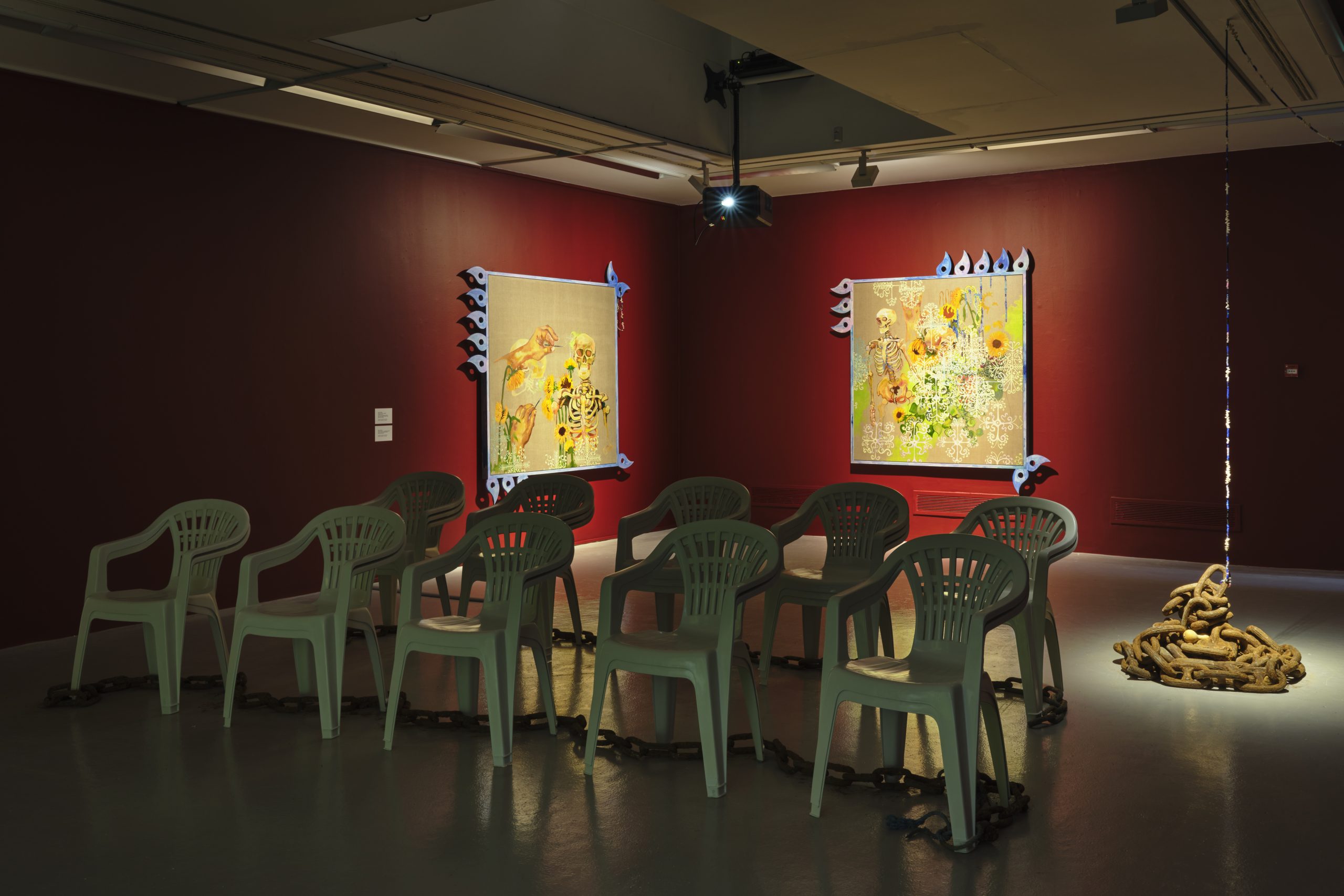
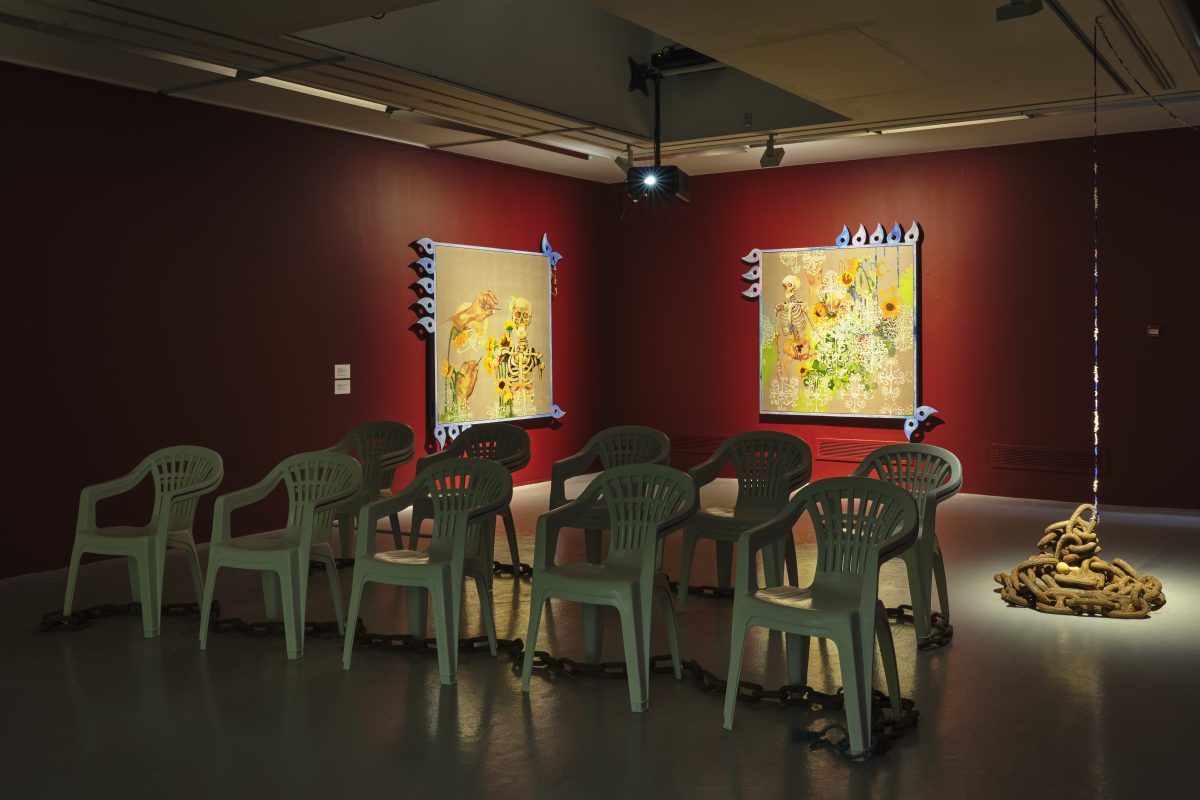
Alberta Whittle (b. 1980 Bridgetown, Barbados) lives and works in Glasgow. After studying Fine Art at Edinburgh College of Art, she completed a master’s degree at Glasgow School of Art in 2011. Alberta received her PhD from the University of Edinburgh in 2024 and is currently a Research Associate at The University of Johannesburg in South Africa.
Her extensive range of exhibitions include a 2 person solo presentation at IMMA, Dublin (2026) and solo exhibitions at Nicola Vassell, New York (2025), Mount Stuart, Isle of Bute (2024), Institute of Contemporary Art, Philadelphia (2024, with Dominique White); Institute of Contemporary Art, Los Angeles (2023); Scottish National Gallery of Modern Art, Edinburgh (2023); Holburne Museum, Bath (2023); Scotland + Venice, 59th Venice Biennale (2022); University of Johannesburg Gallery, Johannesburg (2021); Jupiter Artland, Edinburgh (2021); Glasgow International (2021); Grand Union, Birmingham (2020); and Dundee Contemporary Arts (2019). Selected group exhibitions include Dancing the Revolution: From Dancehall to Reggaeton, Museum of Contemporary Art Chicago (2026), Earth Matters, Royal Botanical Gardens, Edinburgh (2026), Soulscapes, Dulwich Picture Gallery, London (2024); Black Atlantic: Power, People, Resistance, The Fitzwilliam Museum, Cambridge (2023); Soft and weak like water, 14th Gwangju Biennale, Gwangju (2023); British Art Show 9 (2021–2022); Moving Bodies, Moving Images, Whitechapel Gallery, London (2022); Black Melancholia, CCS Bard Hessel Museum of Art, Annandale-on-Hudson (2022); Sex Ecologies, Kunsthall Trondheim, Norway (2021); and Life between islands: Caribbean British Art 1950s – Now, Tate Britain, London (2021).
albertawhittlestudio.com
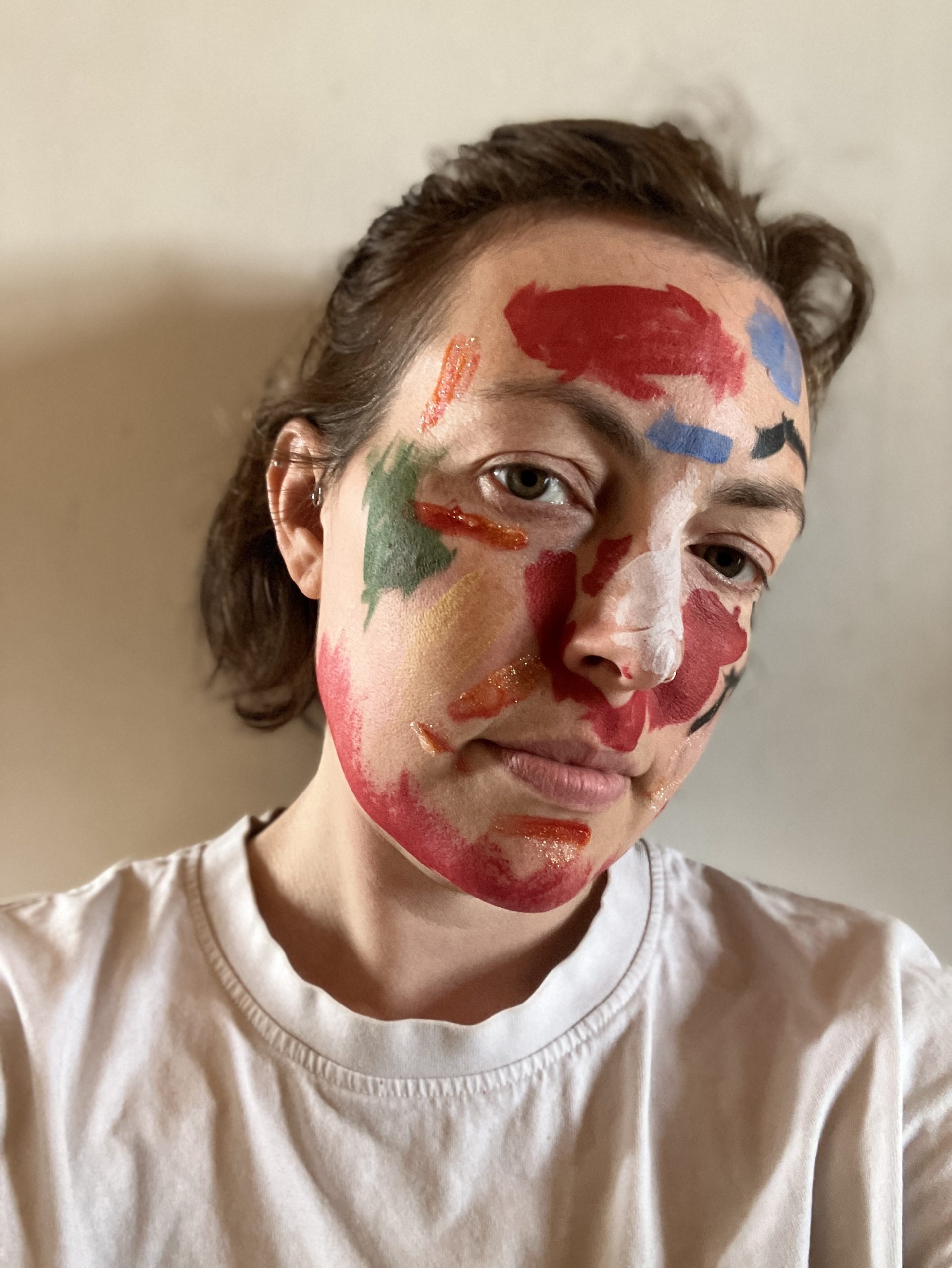
Marie-Claire Lacey‘s practice moves between socially engaged art, participatory and creative action research, and autoethnography. She is interested not only in what these forms of practice produce, but in the conditions under which art and knowledge are made: how we organise ourselves, how decisions and resources are shared, whose knowledge is recognised, and whose lives our ways of working are designed around.
Marie-Claire’s background spans sociology and fine art, having completed a Masters in Equality and Human Rights before going on to study Sculpture and Environmental Art at Glasgow School of Art. She often uses personal experience as a starting point for investigating wider social and political structures.
Marie-Claire’s current research is particularly concerned with the politics of care, and with what care might offer as a framework for reimagining how we work and organise. Robin G. Isserles’ concept of a Political Culture of Care has been important to this thinking. Drawing on feminist care theory, the concept challenges a dominant idea of progress organised around economic growth, accumulation, competition and self-interest, proposing instead interdependence, collective responsibility and human flourishing. Care here goes beyond simply meeting the needs of the vulnerable, towards an ethic, practice and political position which challenges the privileging of individuality, efficiency and autonomy.
whereelse.co.uk
instagram.com/marieclairelacey

Maud Hewlings is an artist, living and working in Glasgow. Broadly regarding herself as a sculptor, she works with clay, collage, painting, photography, animation and found objects.
When working with ceramics, she uses traditional hand-building methods to make sculptural pieces. More recently, she has become especially interested in playing and experimenting with traditional slipware techniques. She is interested in using traditional techniques and materials in unexpected and novel ways.
instagram.com/maudhewlings

Rosie Priest’s practice sits at the intersection of collective care, sculptural experimentation and speculative imagination. With a PhD focused on collaborative visual art practices, their work explores art as a space for connection, resistance and collective possibility. Alongside facilitation and socially engaged practice, Rosie increasingly works through ceramics, sculpture, sound and installation. Rosie leads the Space Celebration Organisation, an ongoing project that counters extractive, hypermasculine narratives of space exploration with gestures of joy, collectivity and reverence for the Earth. Across their practice, they’re interested in slowness, play and making as ways of imagining more tender and non-extractive futures.
rosieaspinallpriest.co.uk/socially-engaged-art/past-projects