Over the next few months we will be sharing more about our Ceramic Subscribers who join us year round in the Ceramics Studio at SSW.
Ceramics Subscription enables users to have regular, independent access to SSW’s Ceramics Studio along with some technical guidance. It is aimed at supporting a broad range of people both artists and makers with existing skills and experience working in ceramics as well as those who are beginners, and are keen to develop their ceramics skills and knowledge with regular workshop access. You’ll be able to develop your own projects and practice clay skills within a friendly group with access to a wide range of equipment and materials.
You can find out more about Ceramics Subscription at SSW here.
First up is Dx (she/her), Thrawn Pots, find out more about her ceramics journey and what she has been upto recently in the studio.
Words below by Dx, Thrawn Pots, images by Dx, Thrawn Pots and SSW.
–
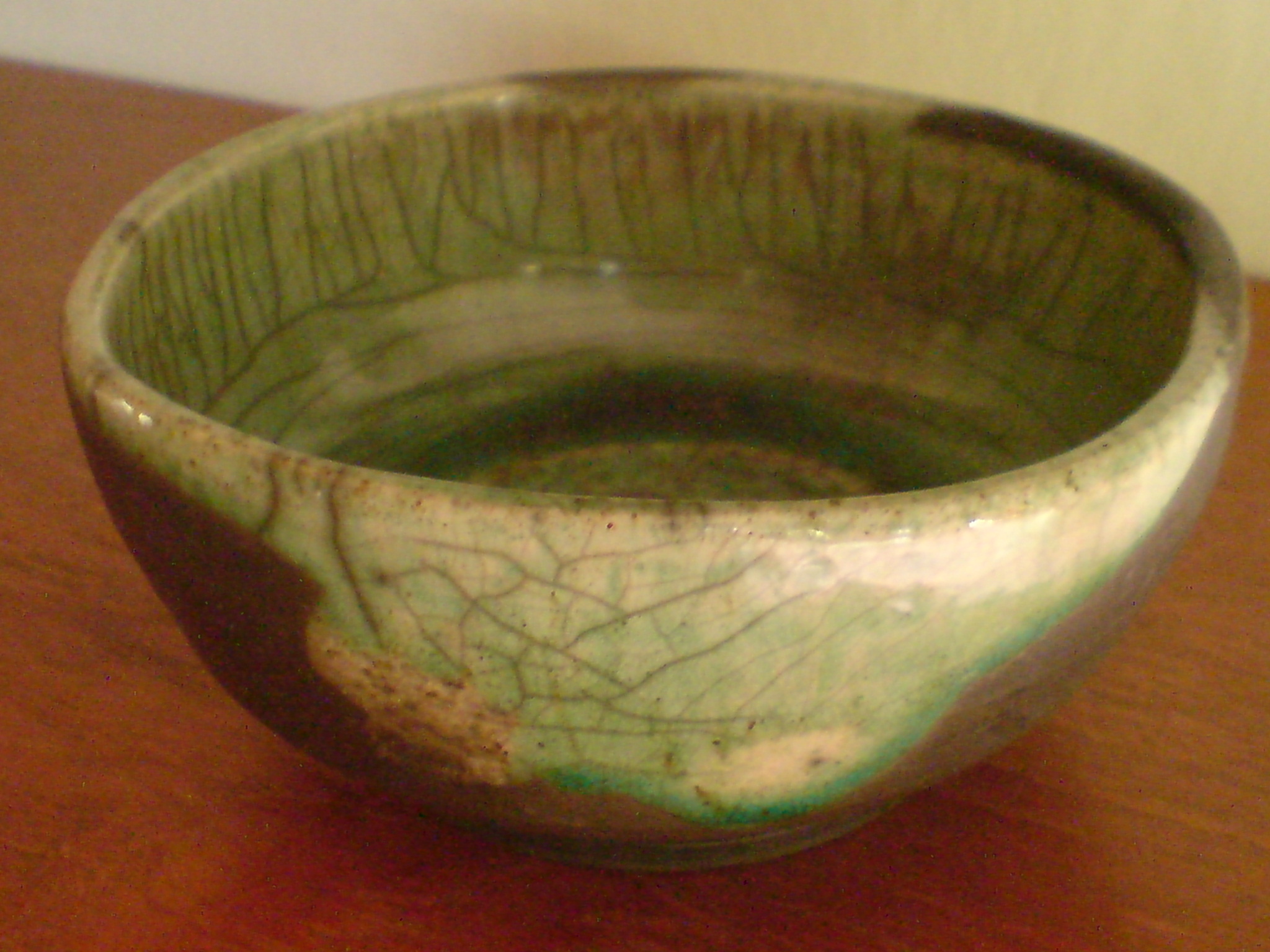
I’ve always liked trying out different crafts so back in 2019 when I heard SSW was running an Introduction to Ceramics and Raku over a couple of weekends I couldn’t resist. Making things out of clay, painting them and then setting them on fire sounded like great fun – and it was! I had no expectations of how anything would turn out and I found the unpredictably of the results intriguing: an accidental thumbprint became an interesting detail on this little pot for example.
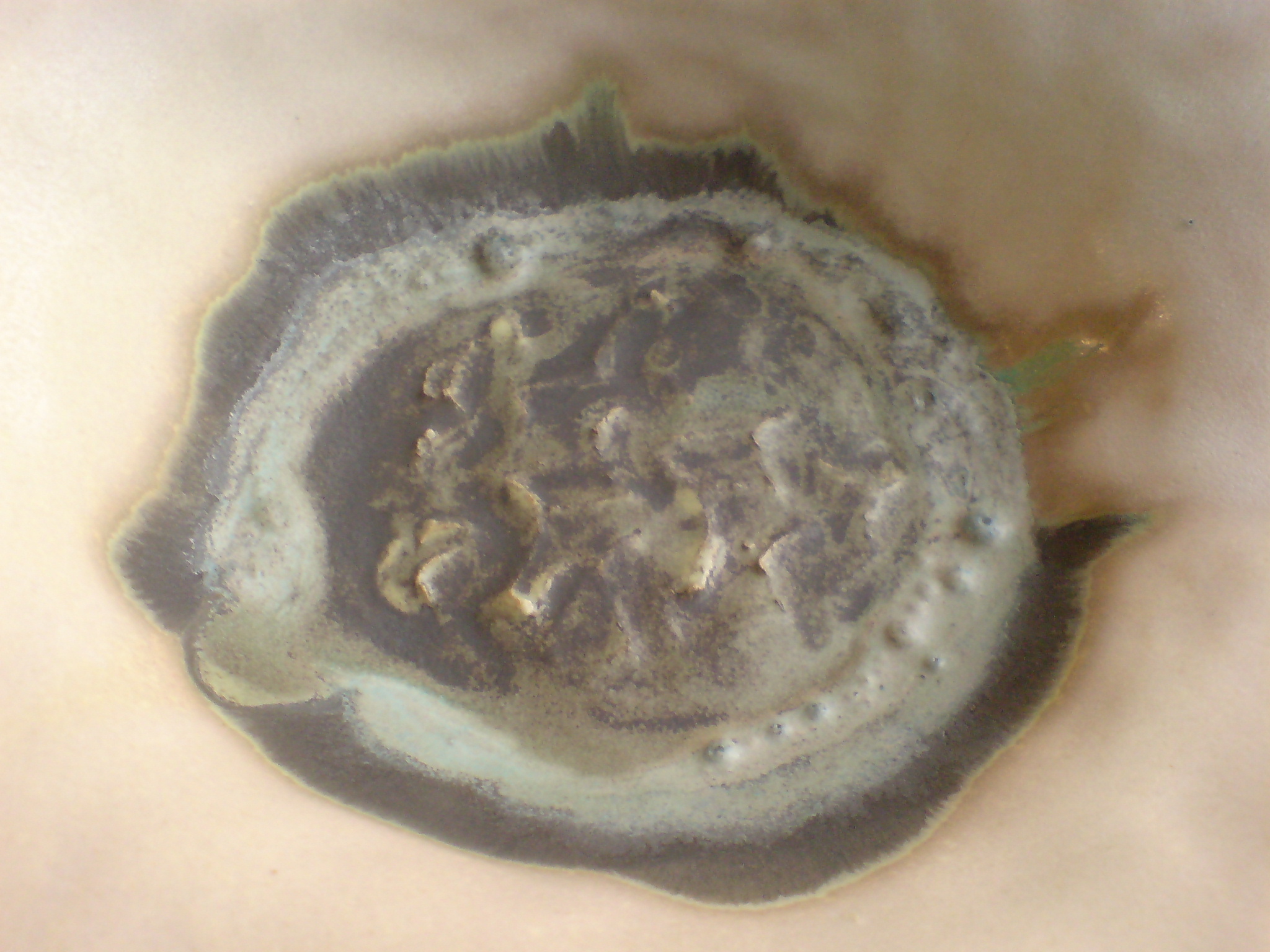
The next year I returned for a Large Hand Building course. Once the pieces we’d made had been bisque fired, a couple of us booked a follow-up session with the ceramics technician to decorate them using a selection of beautiful in-house glazes.
I was keen to learn more so I attended a short Foundation Ceramics course at Gray’s School of Art that winter. I had hoped to follow that with the Intermediate course but then COVID happened and everything shut down… Fortunately, when SSW reopened it set up the Regular Practice scheme providing access to the ceramics studio and technical support. I immediately signed up so I could continue to play and explore.
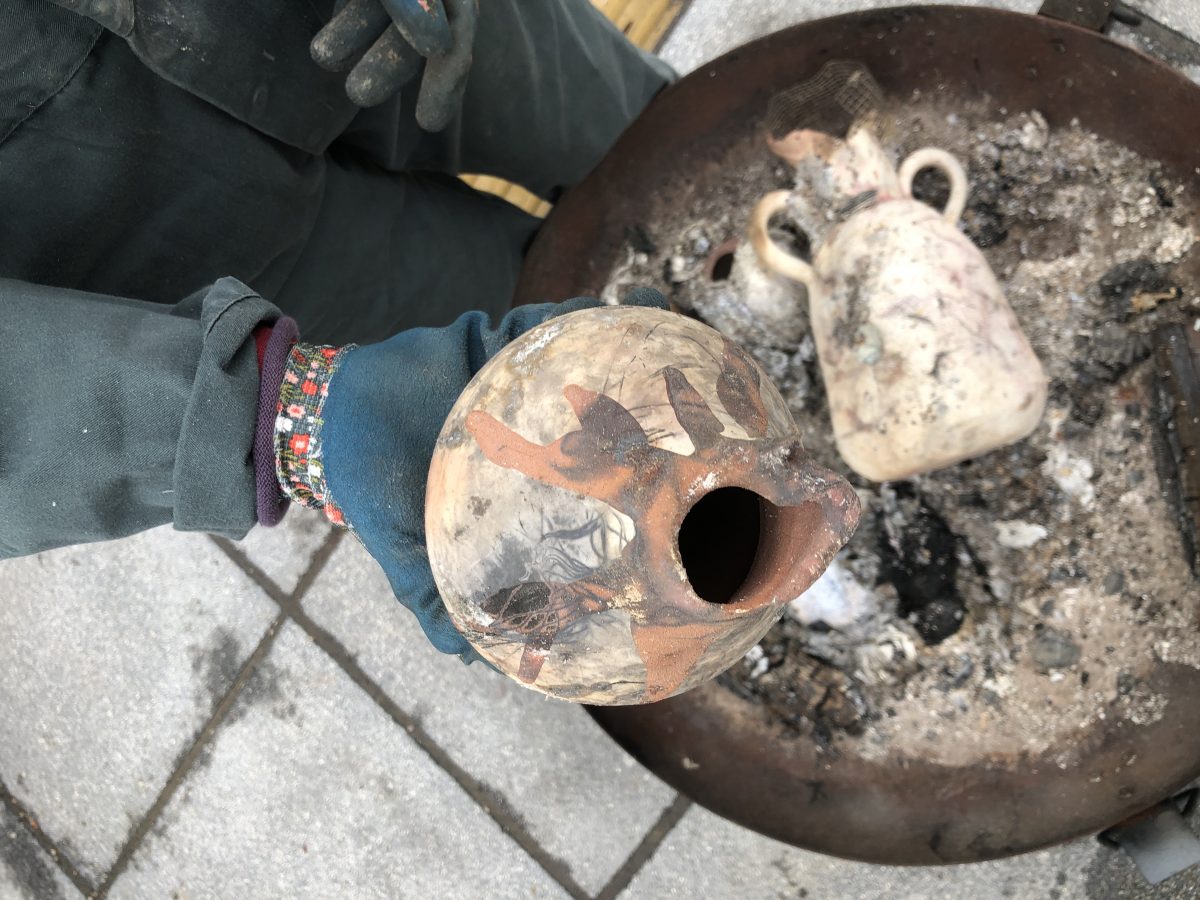
Courses also restarted and one of the first to be scheduled was on Alternative Firings. Instead of using conventional electric kilns, we experimented with firing pots in firepits, barbecues, did more raku in a gas-fired kiln and also made a paperkiln. That was a fun and messy team effort involving making a wooden framework, filling it with a nest of combustible materials for our pots, and then wrapping it with countless layers of papier-mâché made using slip. We carefully wheeled the kiln across the yard and lowered it onto a bonfire. After it had burned for a while it was topped with a papier-mâché hat, sealed round the base to cut off the oxygen supply and left overnight for the magic of the reduction reactions to happen. Once the top had been sawn off the next day, we had an exciting lucky dip reaching deep into the pile of ash to extract and admire the beautiful results.
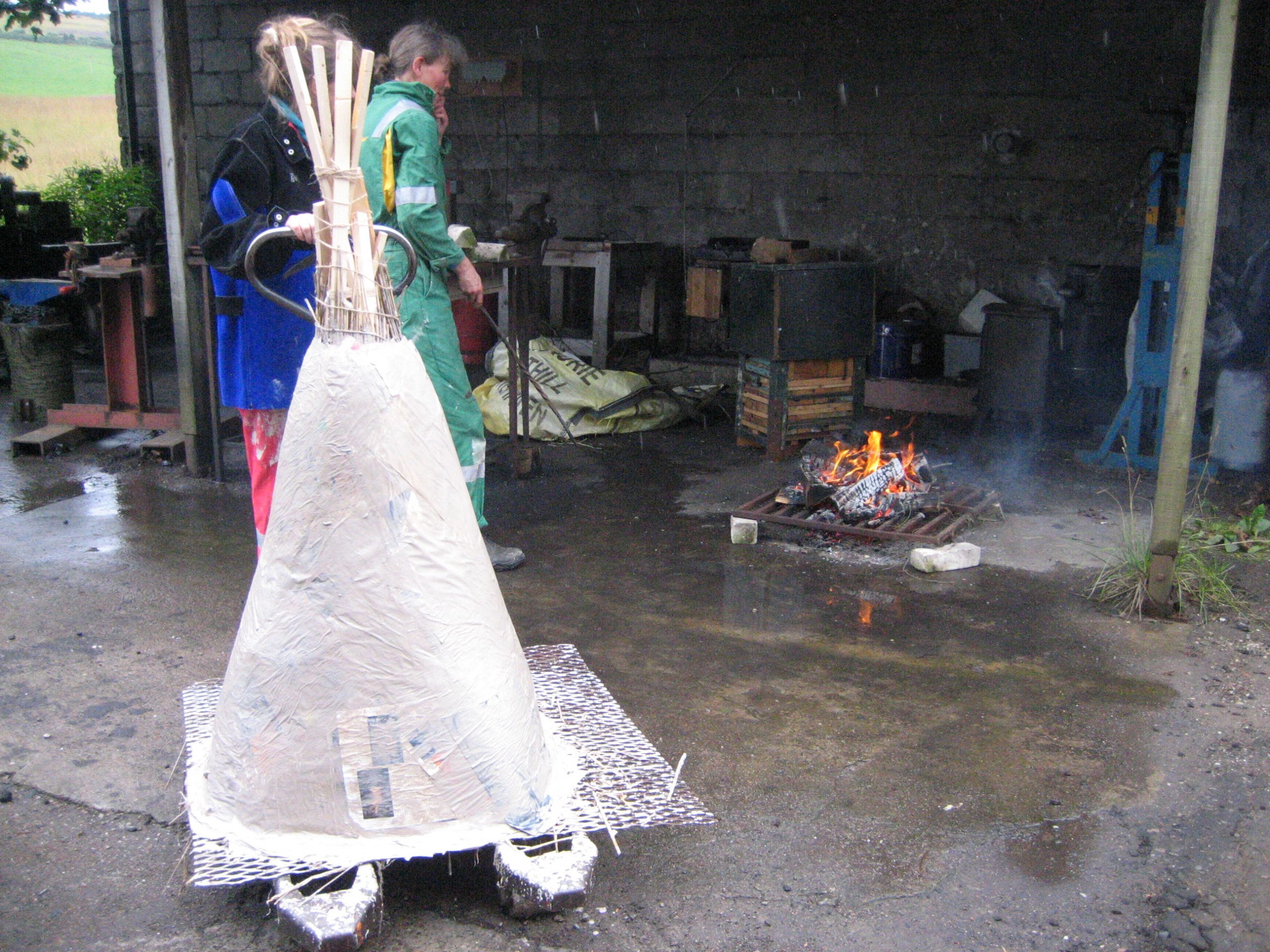
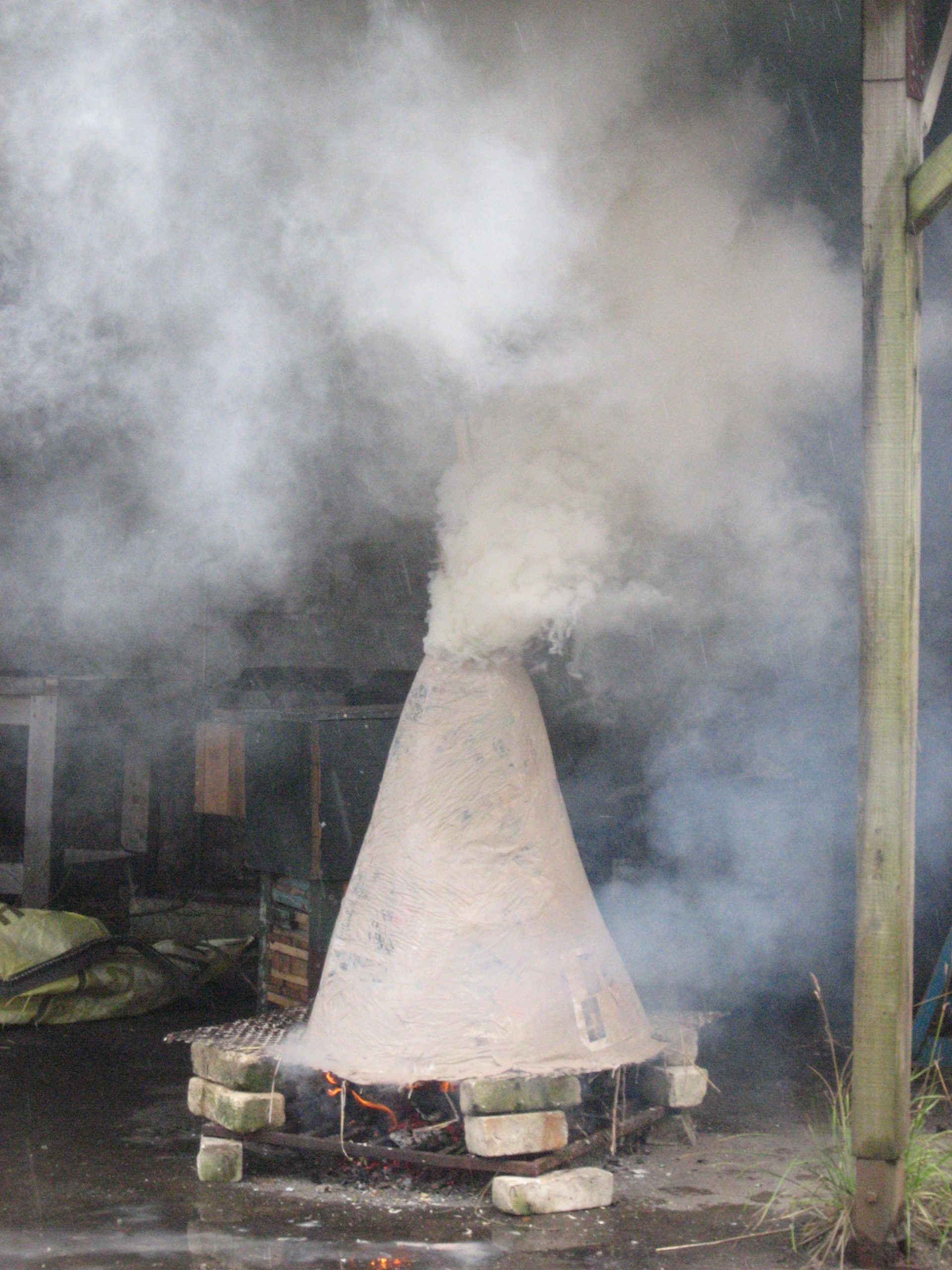
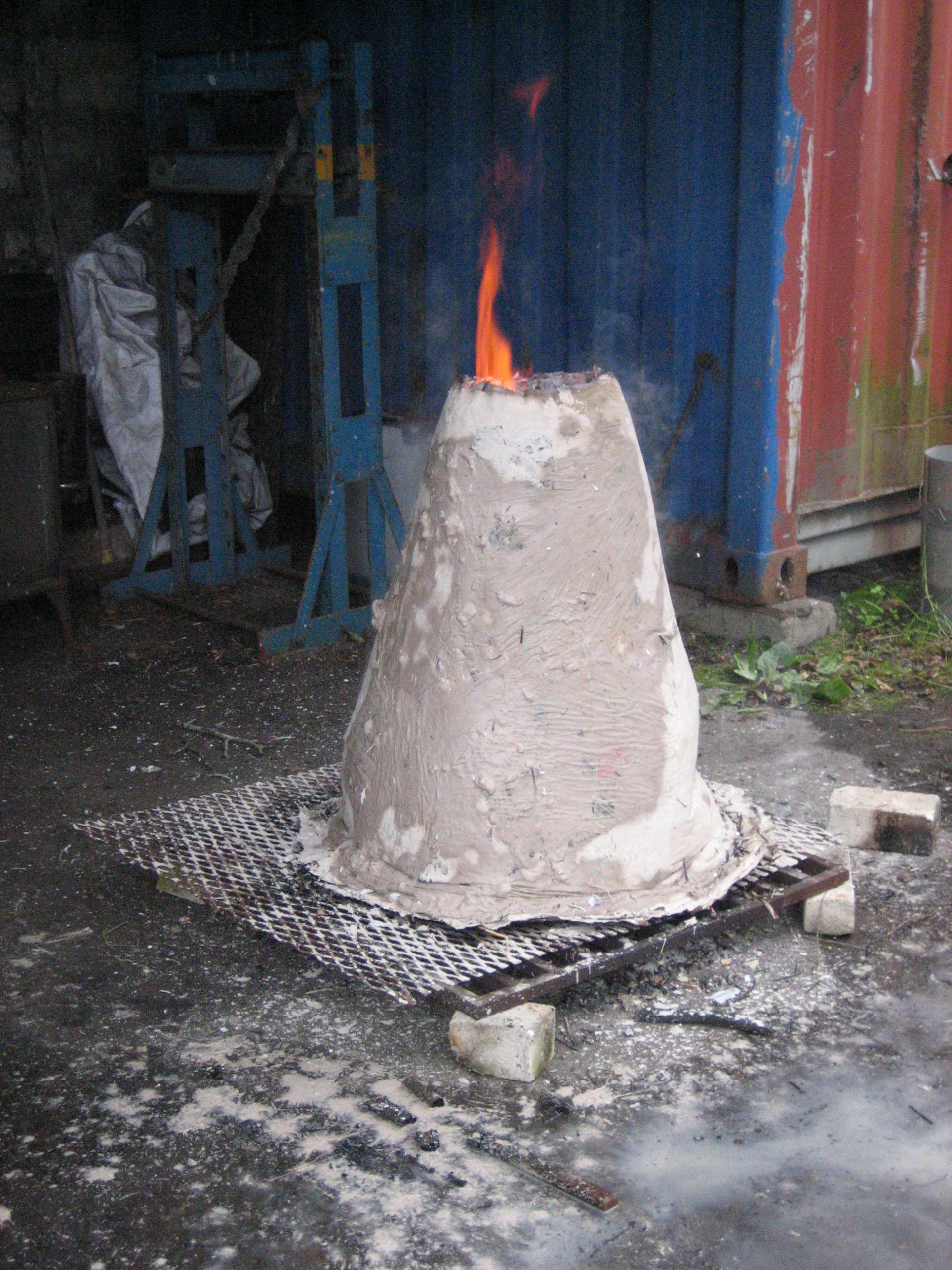
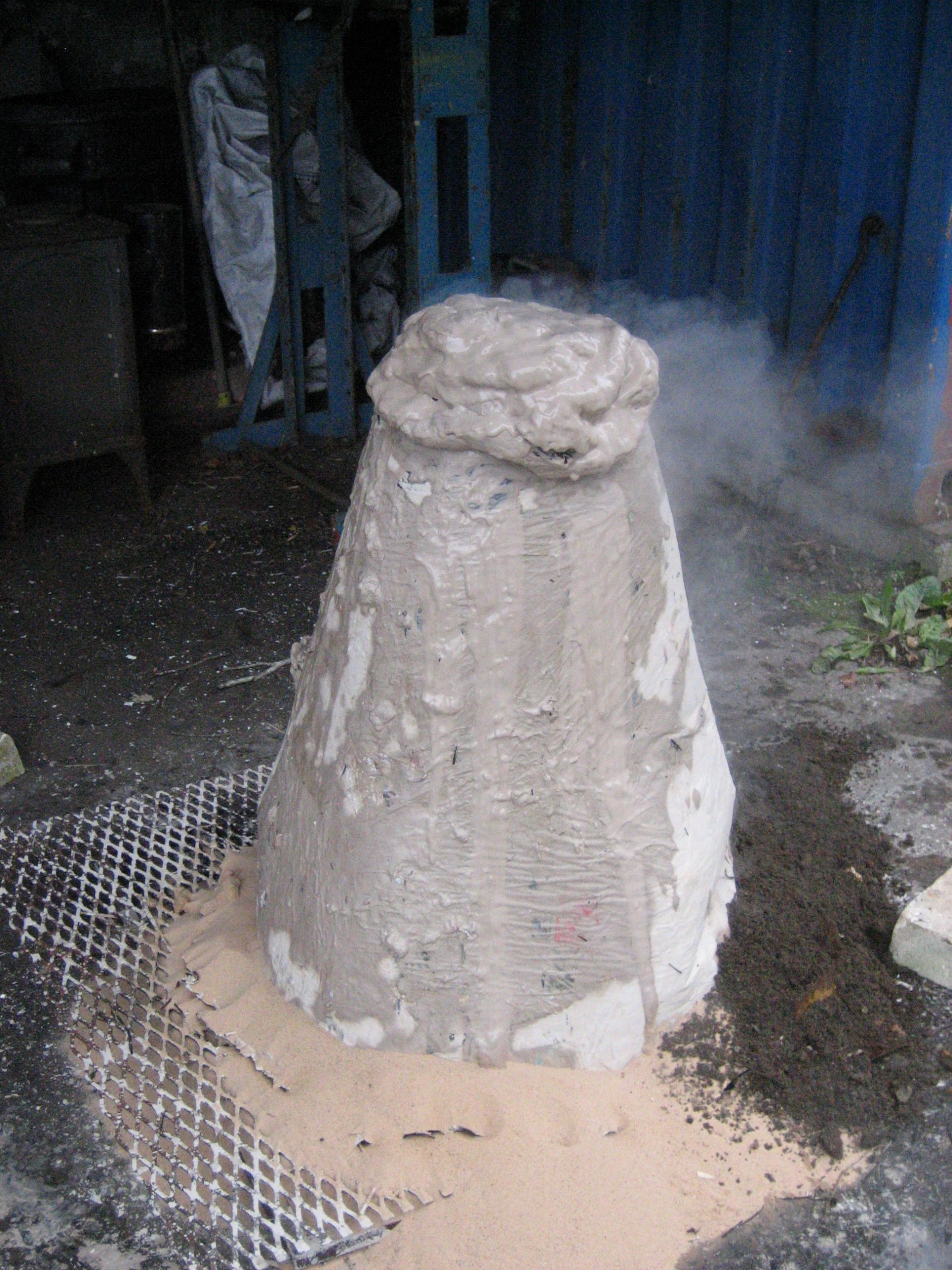
Paper kilns, image credits: Thrawn Pots
I missed being at SSW while the ceramics studio was being rebuilt but it was worth the wait and the space is totally transformed. There are so many aspects of ceramics to explore and the studio is well equipped to support whatever your particular interest is. As well as continuing to practise basic techniques like coiling and throwing, I found myself drawn to experiment with different glaze effects.
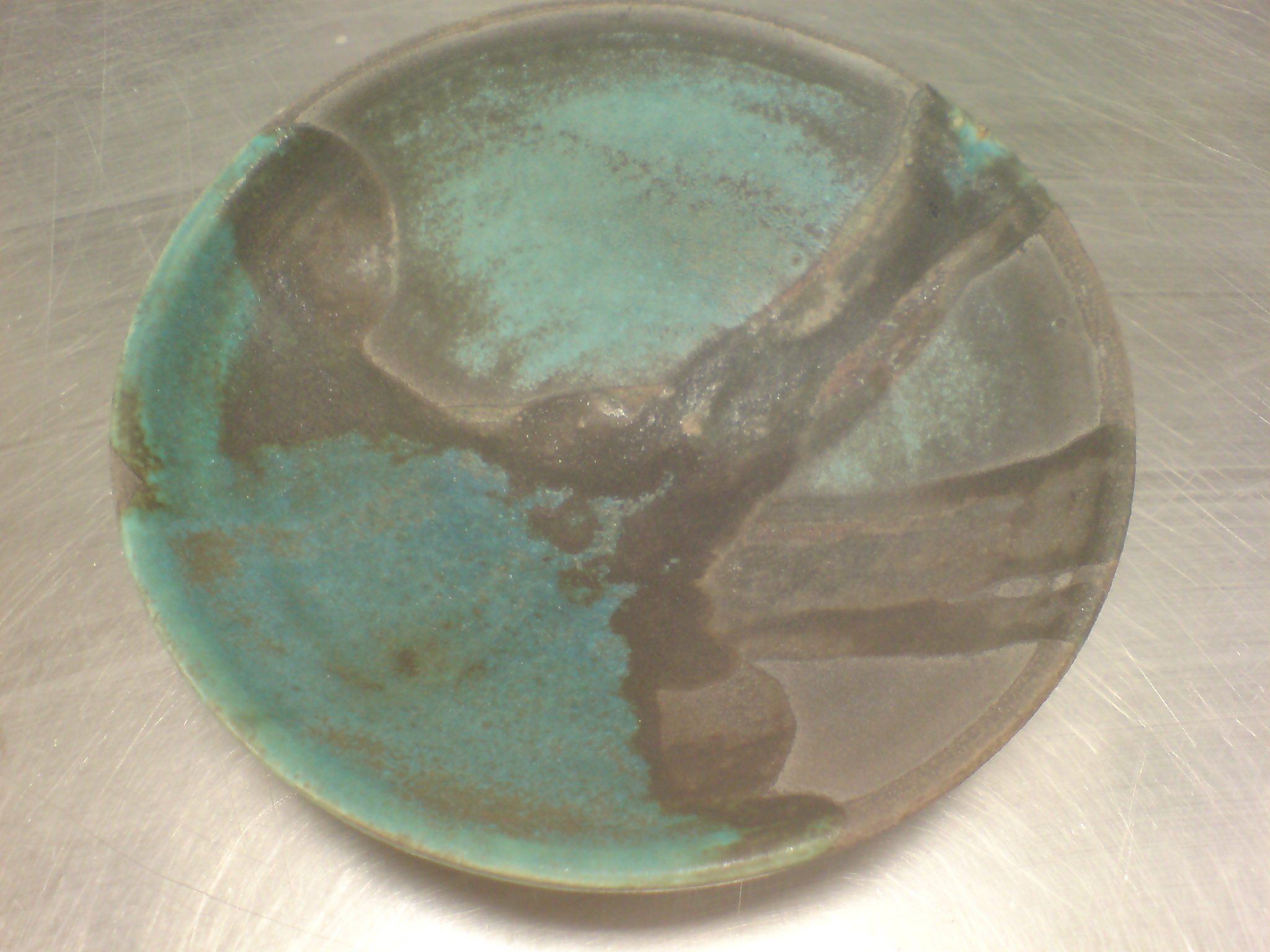

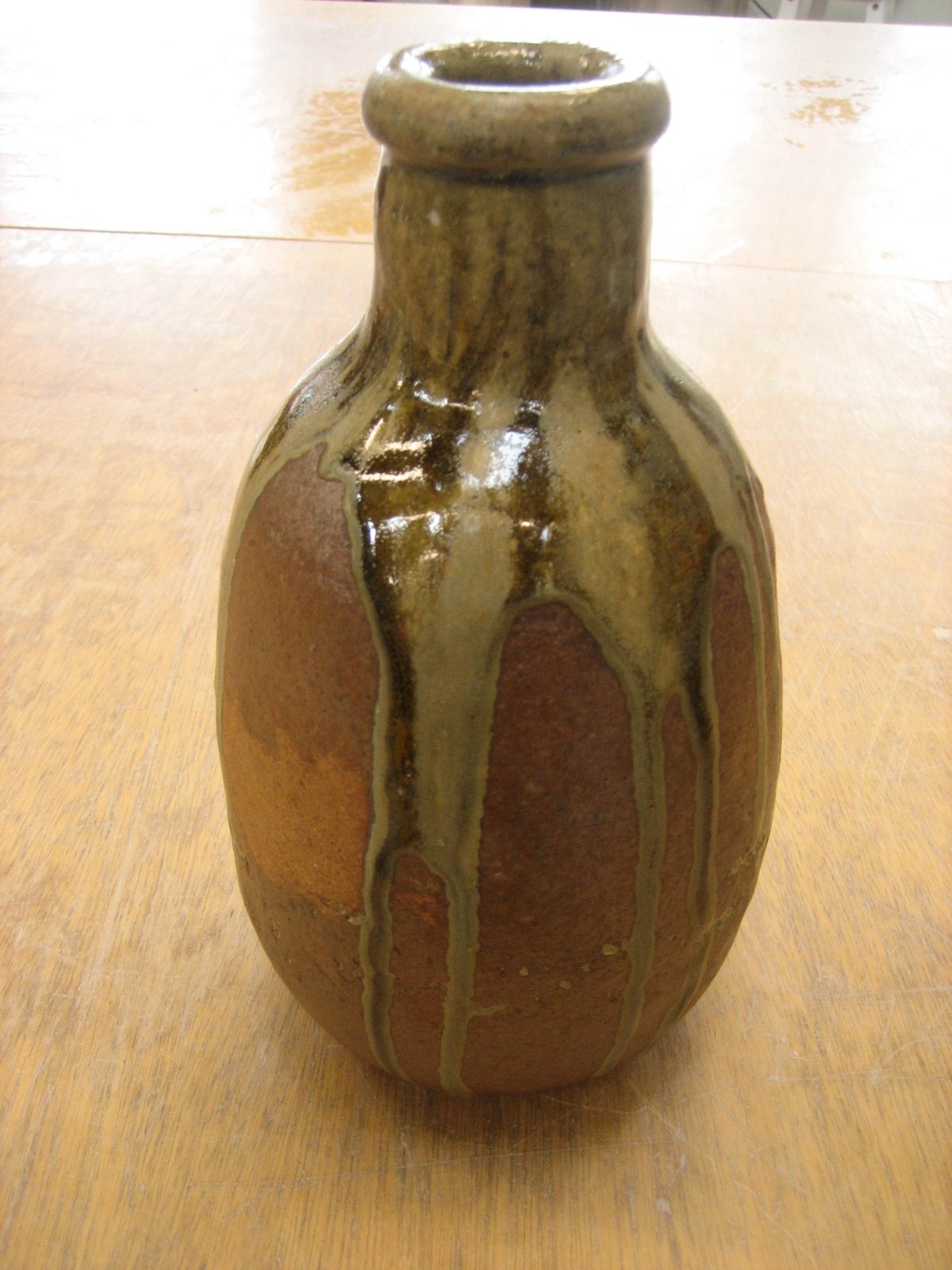
The results inspired me to go on the Glaze Intensive course to gain a better understanding of what was going on. I learned how to mix up a series of test glazes to see how varying the proportions of the components affects the outcome and then I used that knowledge to make a bespoke glaze using ash from my home woodburner.

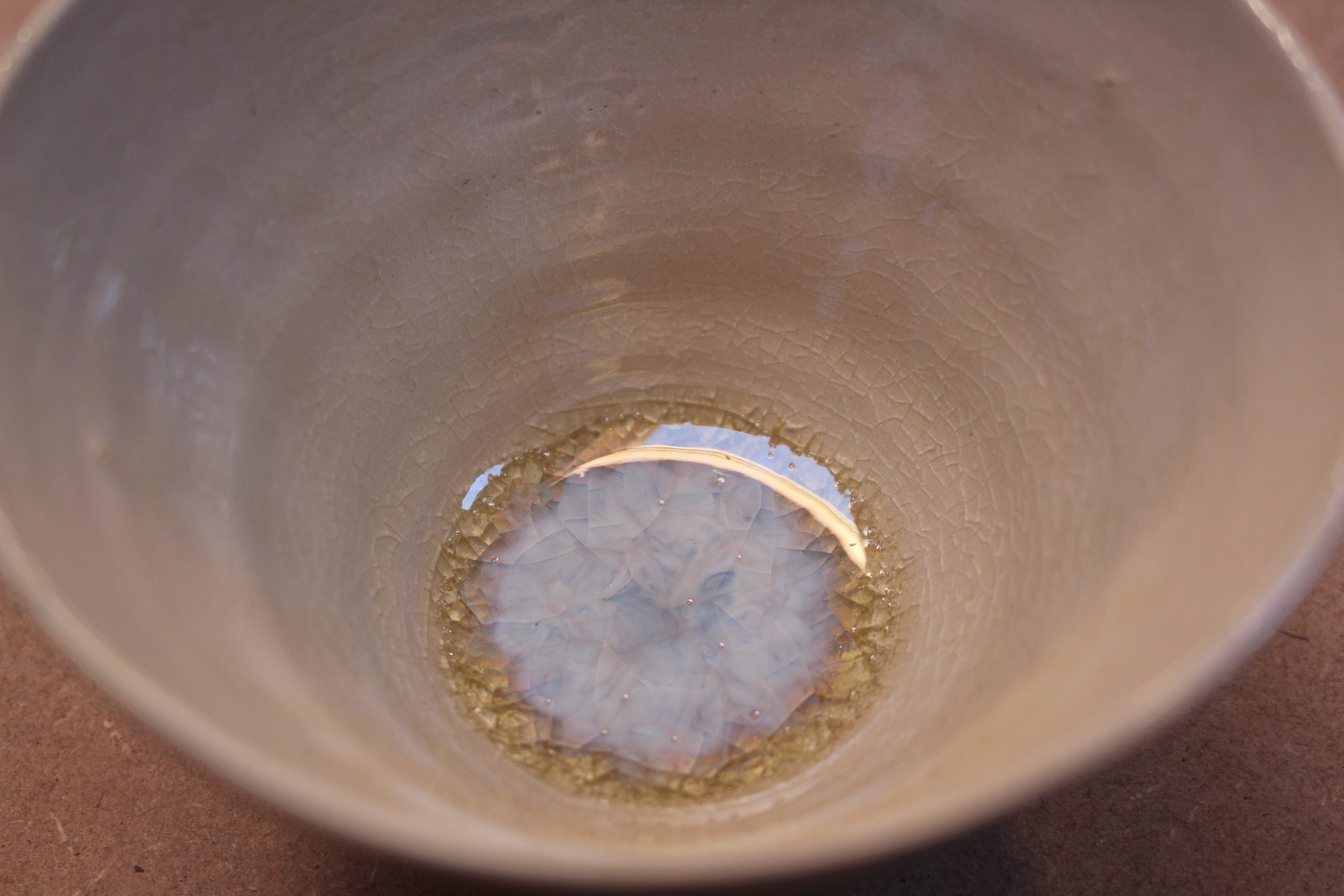
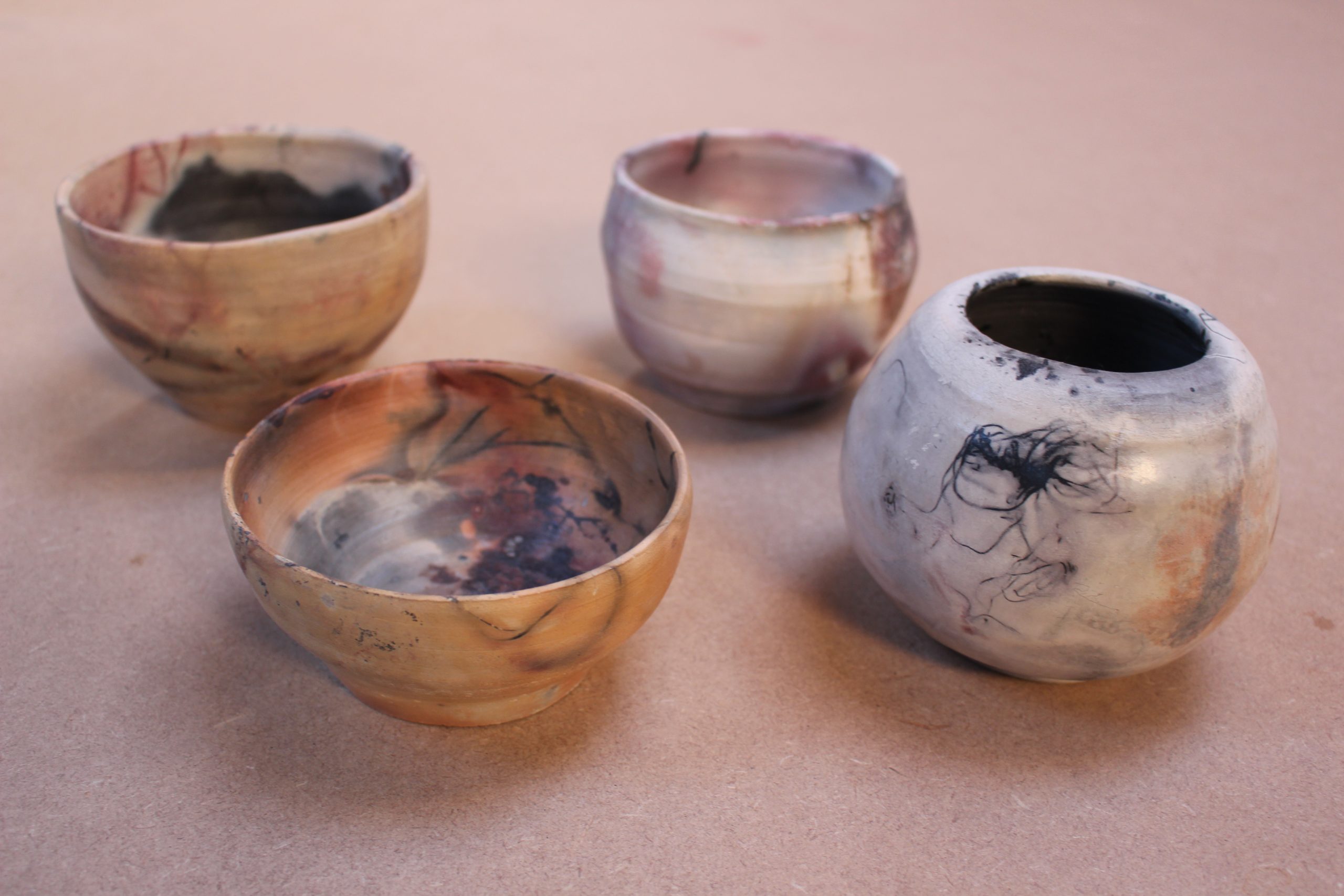
I am also intrigued by the beautifully varied and unexpected effects that can be achieved by pit-firing. I’m looking forward to exploring this more in the coming months.
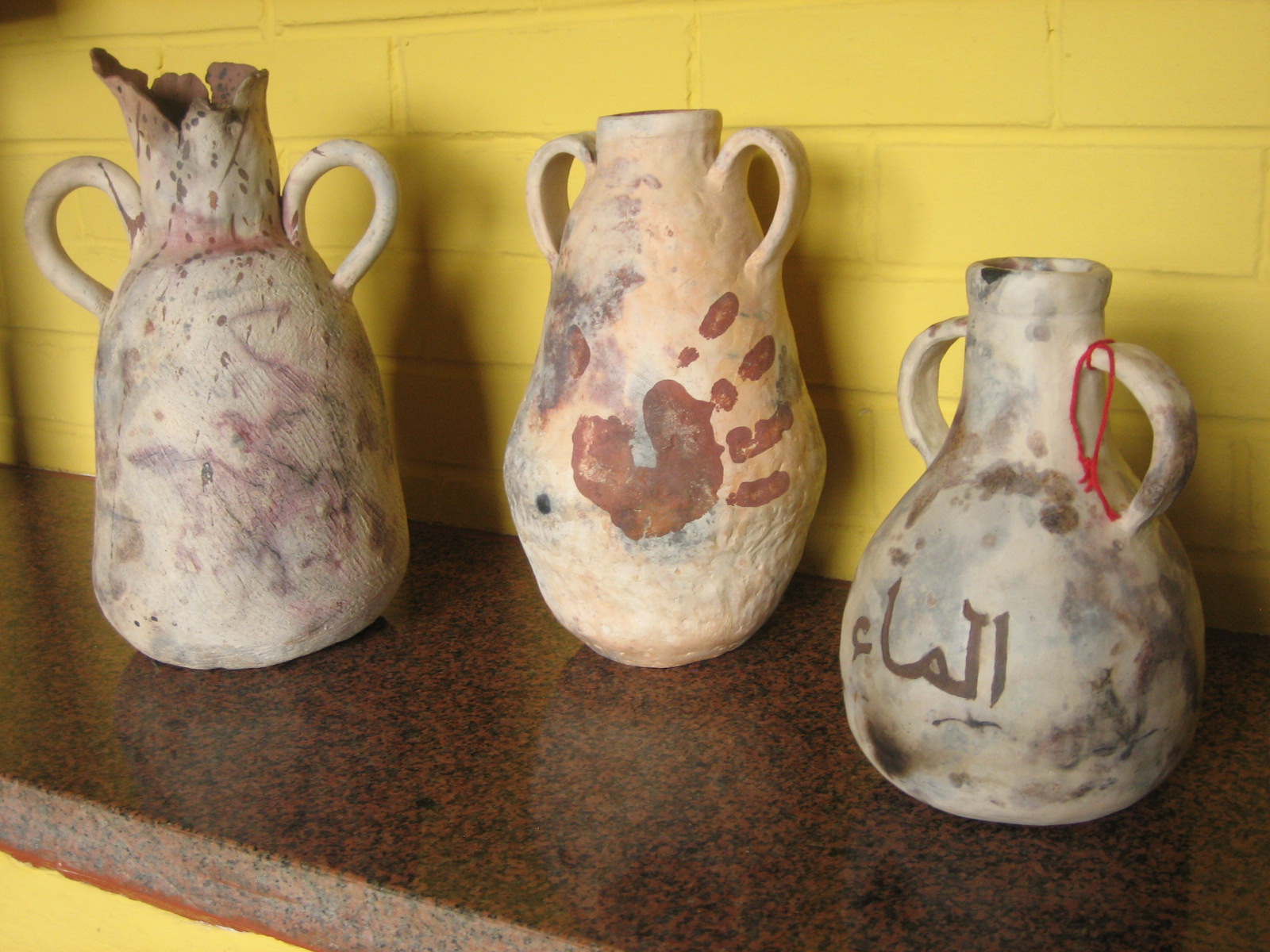
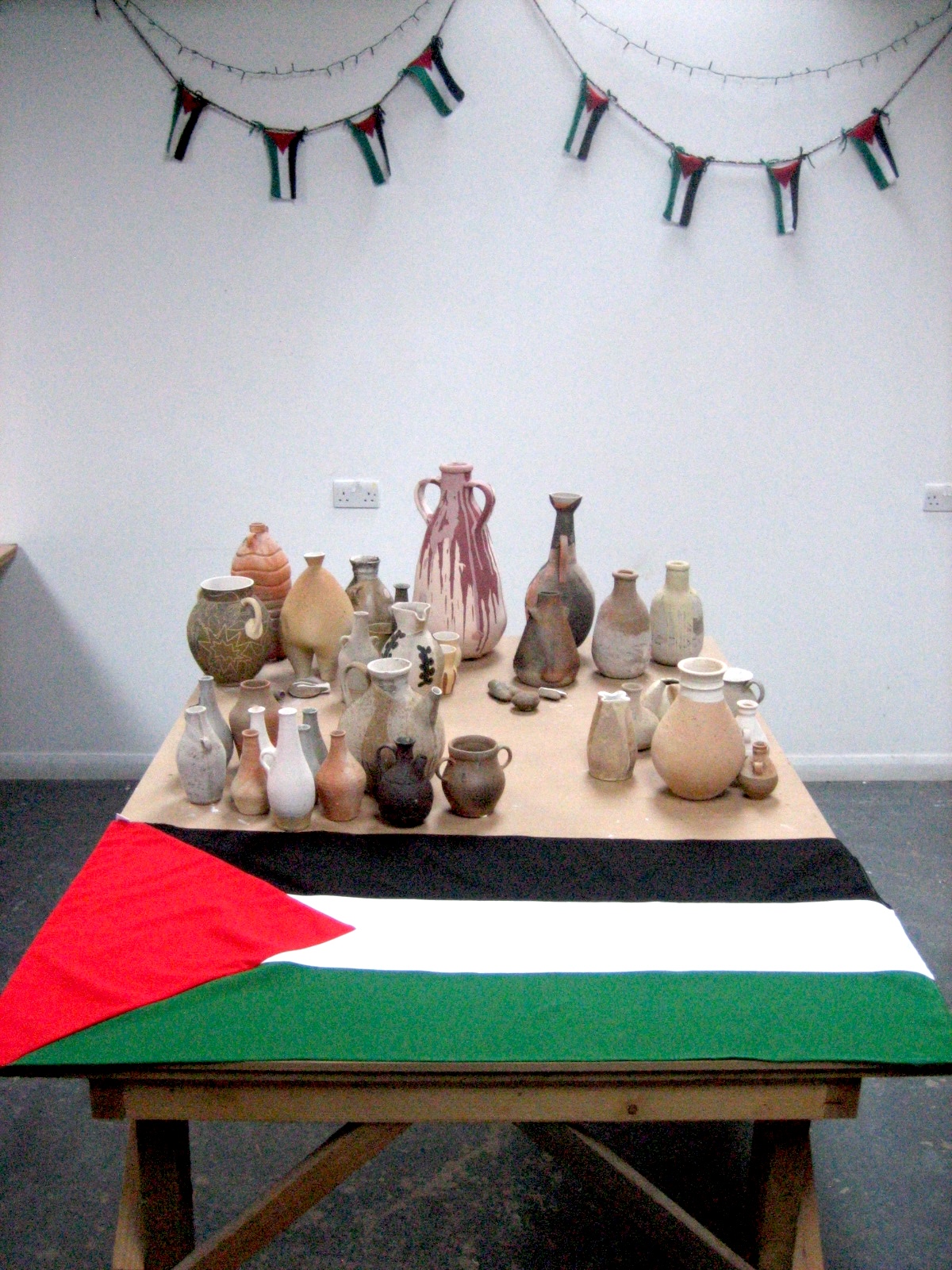
After attending a talk by a group of women who had visited the West Bank, hearing about the water deprivation there, and seeing pictures of children in Gaza risking their lives to fetch water in plastic containers, I started work on a series of pots inspired by traditional Palestinian clay water vessels called Jarrahs.
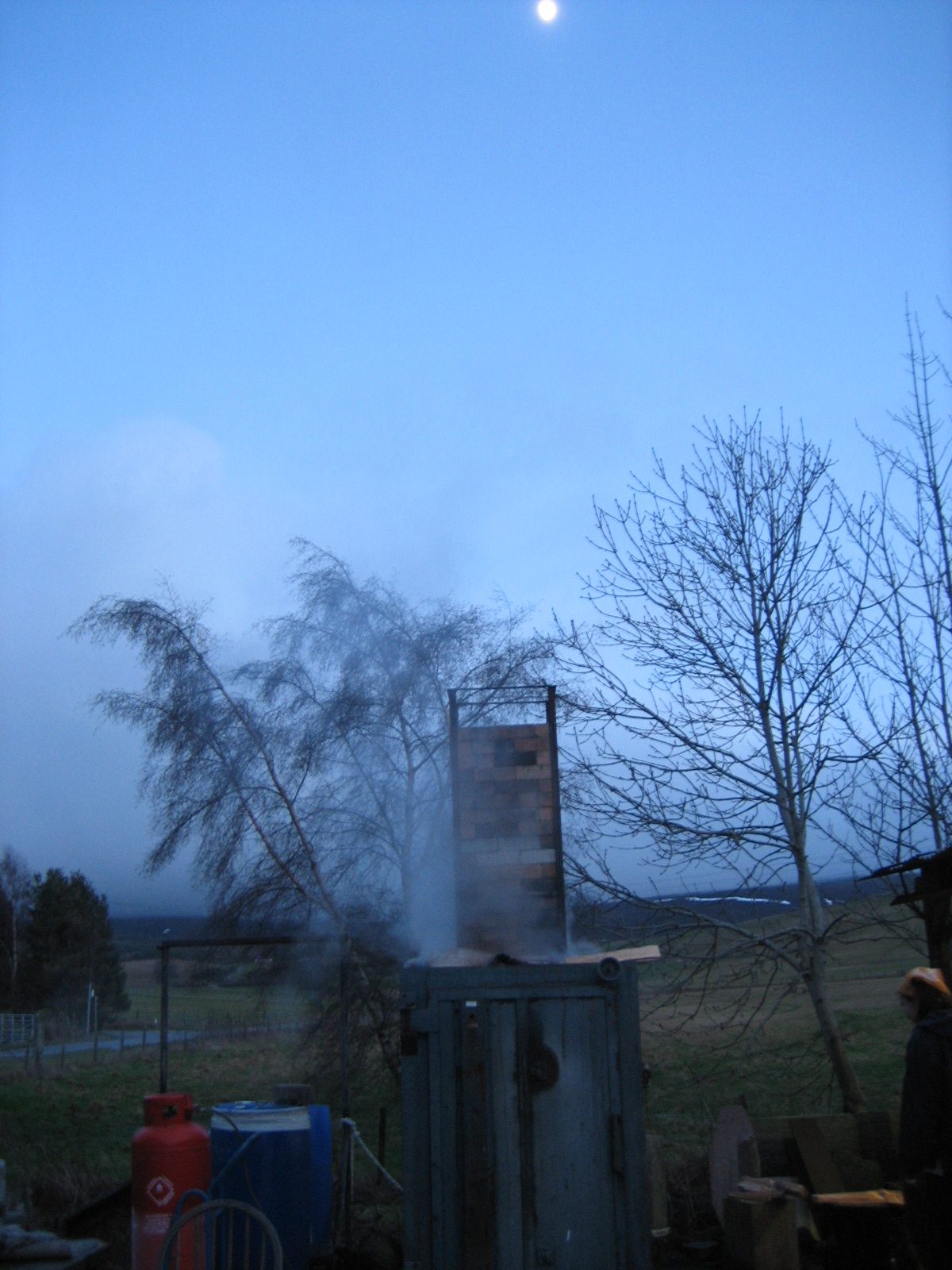
Then in January I was fortunate to have the opportunity to be involved with the This Land is Your Land project organised by ceramicist Cara Guthrie and hosted at SSW. It involved making our own interpretation of a jarrah incorporating local material such as clay or ash. It was an incredibly intense and emotional communal experience as we tried (in vain) to coax ‘Steamy’, the wood-fired kiln, up to the necessary temperature despite everything the Aberdeenshire winter weather threw at us. Fortunately the Angus Community Kiln refired some pots for us resulting in some beautiful effects. I was surprised and pleased with how my pot, decorated with a traditional Tatreez (cross-stitch) design and ash glaze turned out. The pots will be raffled to raise funds for grass-roots organisations in Palestine.
What I love about the Ceramics Subscription scheme is that it gives you access to a wide range of facilities – and friendly, expert technical support – meaning you can try out many different techniques and approaches without the cost involved in buying specialist equipment for yourself. Also it’s a great alternative to being a solo practitioner in a home studio. There’s a real sense of community with the other subscribers with the added benefit of mixing with artists on residency or open-access, students, and members of the local community. Everyone is welcomed and included regardless of their level of experience or expertise – sharing ideas, inspiration, providing support and encouragement, and learning from each other.
–
Thrawn Pots recommends the following further readings:
Centering In Pottery, Poetry, and the Person, M.C. Richards, ISBN 9780819562005
Clay: A Human History, Jennifer Lucy Allan, ISBN 9781399607667