Each month we are sharing more about our Ceramic Subscribers who join us year round in the Ceramics Studio at SSW.
Ceramics Subscription enables people to have regular, independent access to SSW’s Ceramics Studio along with some technical guidance. It is aimed at supporting a broad range of people both artists and makers with existing skills and experience working in ceramics as well as those who are beginners, and are keen to develop their ceramics skills and knowledge with regular workshop access. You’ll be able to develop your own projects and practice clay skills within a friendly group with access to a wide range of equipment and materials.
You can find out more about Ceramics Subscription at SSW here.
This month’s blog is by Donnah Murray of Roots and Cadence, a multidisciplinary artist and land worker based in Morayshire. Find out about Donnah’s ceramics practice and what she’s been working on recently in the studio at SSW.
Words below by Donnah, images by SSW.
–
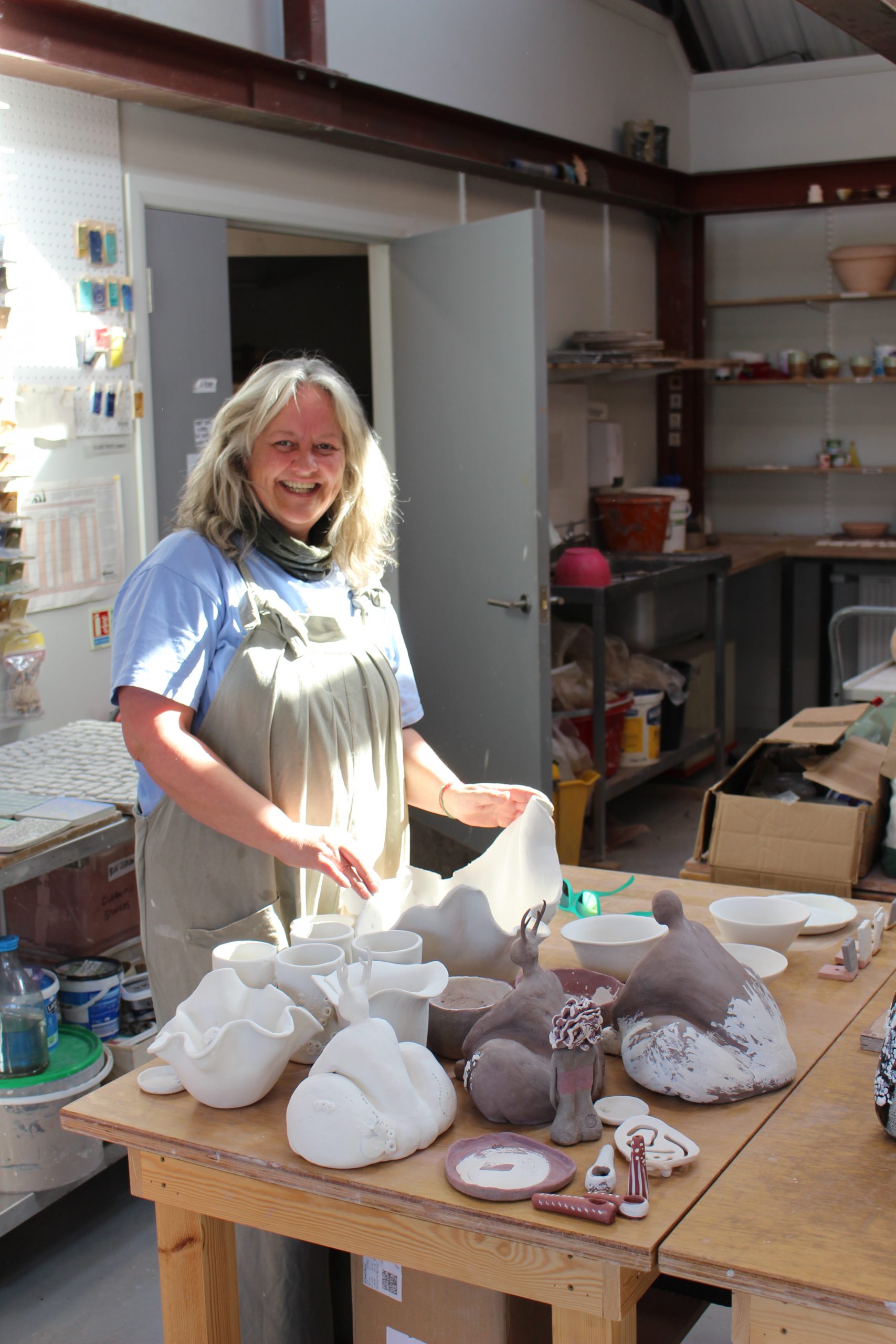
I’m Donnah, working under Roots and Cadence, based in Morayshire.
I work across clay, sound, foraging and land-based practice. Everything I do is rooted in the Highlands and in working with the land—not just as a backdrop, but as something I listen to and respond to.
Before all of this, I worked in forestry and ecology across Scotland, so that connection has always been there. It’s just taken a different form now.
Coming back into creative work has been part of a bigger journey for me—recovery, rebuilding, and figuring out how to live and work in a way that actually supports my wellbeing. Clay has been a massive part of that. It’s steady, it’s honest, and it’s given me a way back into myself.
When did you first start working with clay?
I came to clay at a point where I’d been registered disabled and out of work for quite a long time.
I started through Moray Pathways, who placed me with Vera Bohlen at Claysongs. I did two hours every Wednesday, hand-building, and I did that for nearly three years.
That time was huge for me. It wasn’t just about learning clay—it was about getting back into a rhythm, rebuilding confidence, and starting to feel capable again. Just showing up every week mattered.
By the end of that period, I could feel I was ready to move forward, but the funding ran out and Vera didn’t have the capacity to take me further at that point. It felt like a bit of a cliff edge, but also like the right time to step into something new.
Moray Pathways then helped fund a two-week access programme at Scottish Sculpture Workshop in May 2025, and that really shifted things for me.
That was the point where I started to see myself differently—not just someone learning, but someone actually building a practice.
How did you find out about SSW and when did you first visit?
I actually had no idea about the Scottish Sculpture Workshop before that.
I only found out through Moray Pathways in the weeks leading up to my acess fortnight, so it all came together quite quickly.
Walking in for the first time, I didn’t really know what to expect, but it just felt right straight away. It didn’t feel intimidating—it felt open.
The Ceramics Subscription has been a massive part of my journey. Being part of a group of us who use the studio regularly—it creates this sense of camaraderie and quiet support. You’re all just getting on with your own work, but you’re not alone in it.
That’s been really important for me. That sense of being held in a space like that has helped build my confidence not just in ceramics, but in everything else I’m doing.
It’s also through that regular access that I’ve started to recognise my own signature in the work—especially in my sculptural pieces and surface. That’s been a big moment, actually, realising this is mine.
And I have to say, the team at SSW have been incredible. People like Amy, the ceramics technician—just genuinely one of the best humans. The whole team are kind, supportive and really accommodating. That encouragement, guidance and belief in what I’m doing has absolutely played a part in where I’m at now.
They’ve also been really helpful in practical ways—supporting me through applications, pointing me towards funding opportunities, and generally opening the door into the wider artistic community. That’s been huge.
Open Access Production Residency
During the Open Access Production Residency, I gave myself permission to just explore.
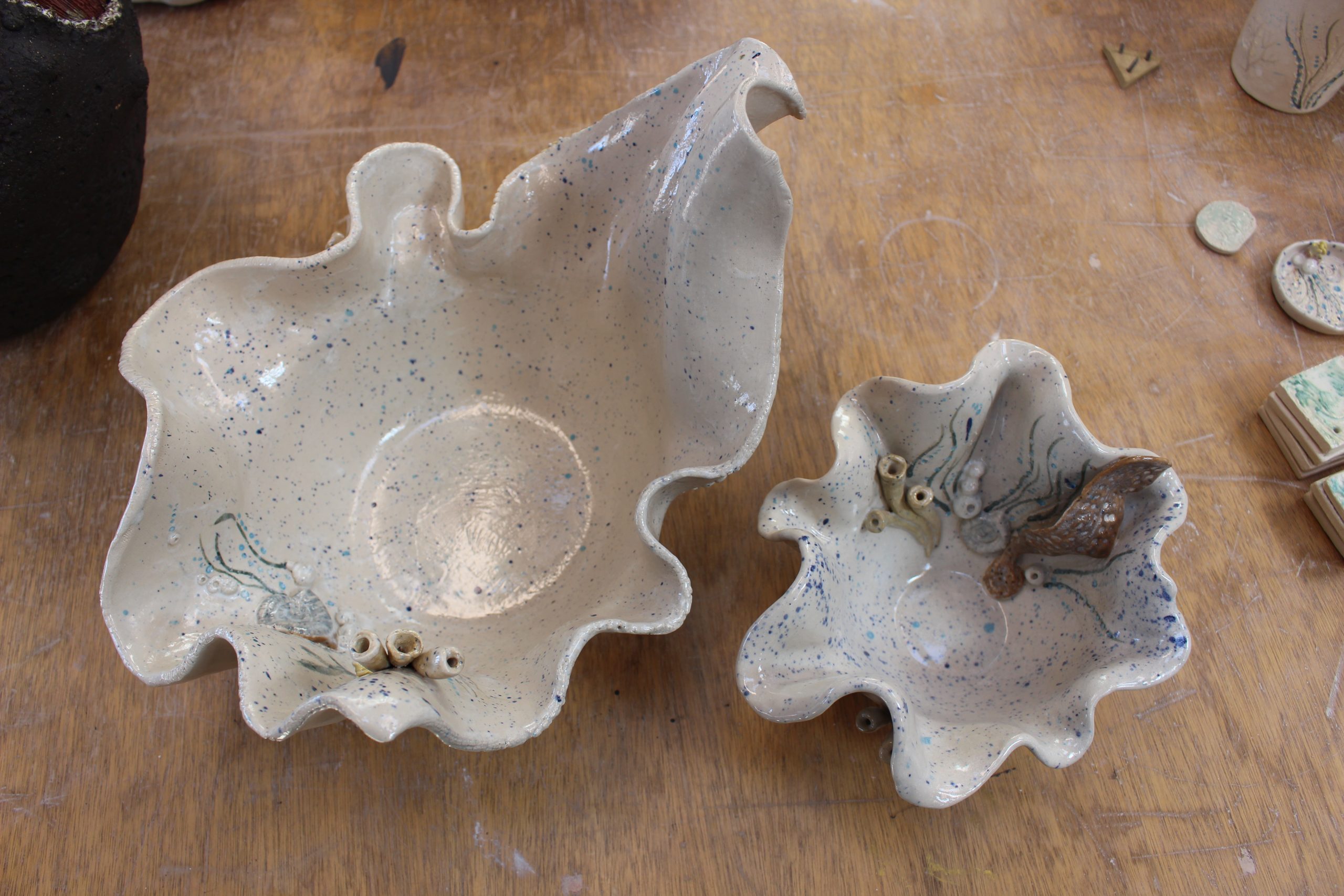
I worked on sculptural vessels—pieces that sit somewhere between functional and storytelling. That’s really where my “story vessels” started to take shape.
I also started letting go a bit more—especially with glazing and outcomes. Not trying to control everything so tightly.
The biggest thing I took from it was confidence. Not in a big loud way, just a steady, growing trust in what I’m doing.
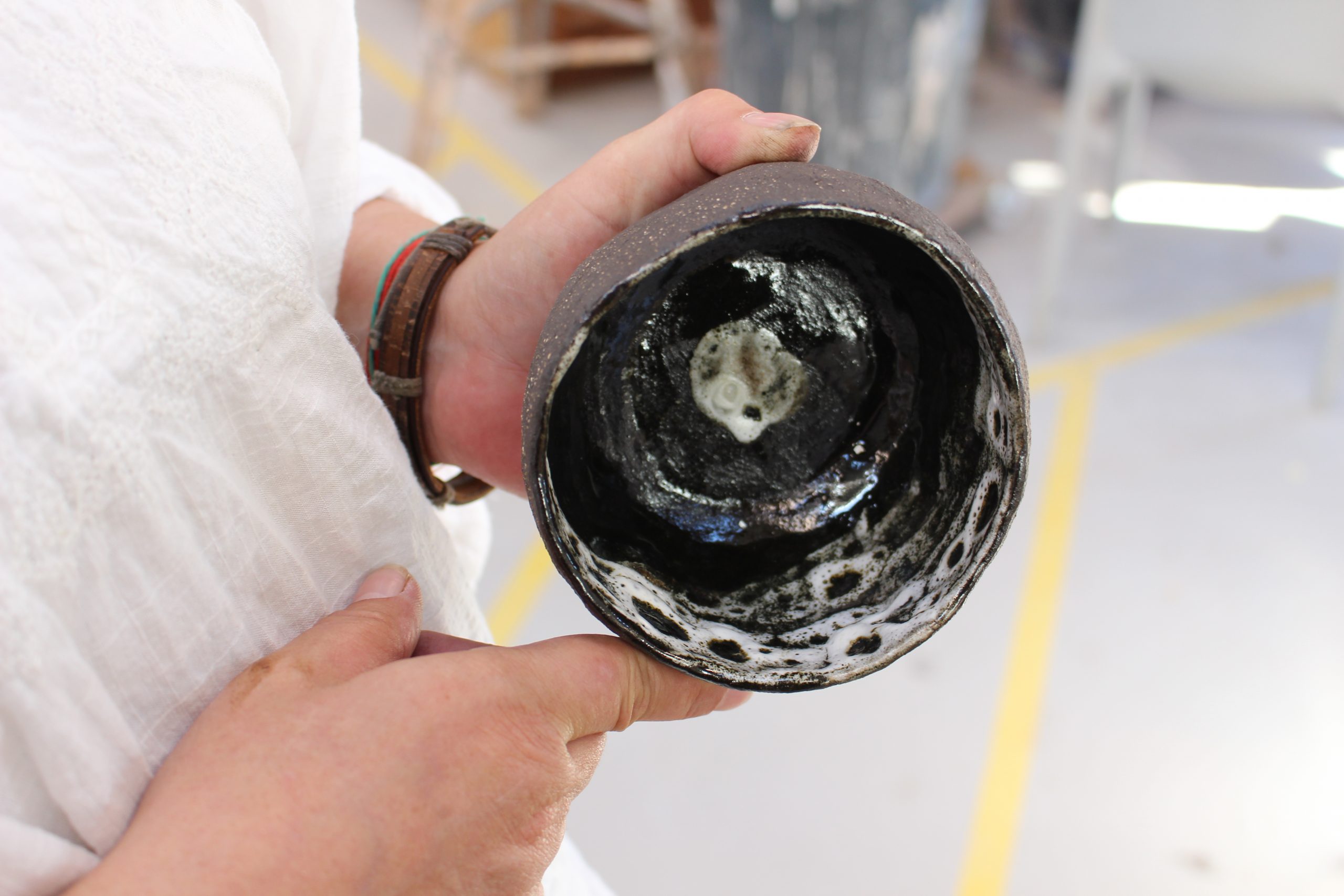
Glaze Intensive
I did the July Glaze Intensive last year, and that really helped shift things again.
Before that, glazing felt quite technical and a bit overwhelming. The course helped me understand it in a more hands-on, intuitive way—how things move, how they react.
I also did the catering for the group in the evenings, which I loved. It felt like a natural extension of what I do—feeding people, creating a space for people to land at the end of the day.
Can you tell us about what you’ve been upto recently in your ceramics practice?
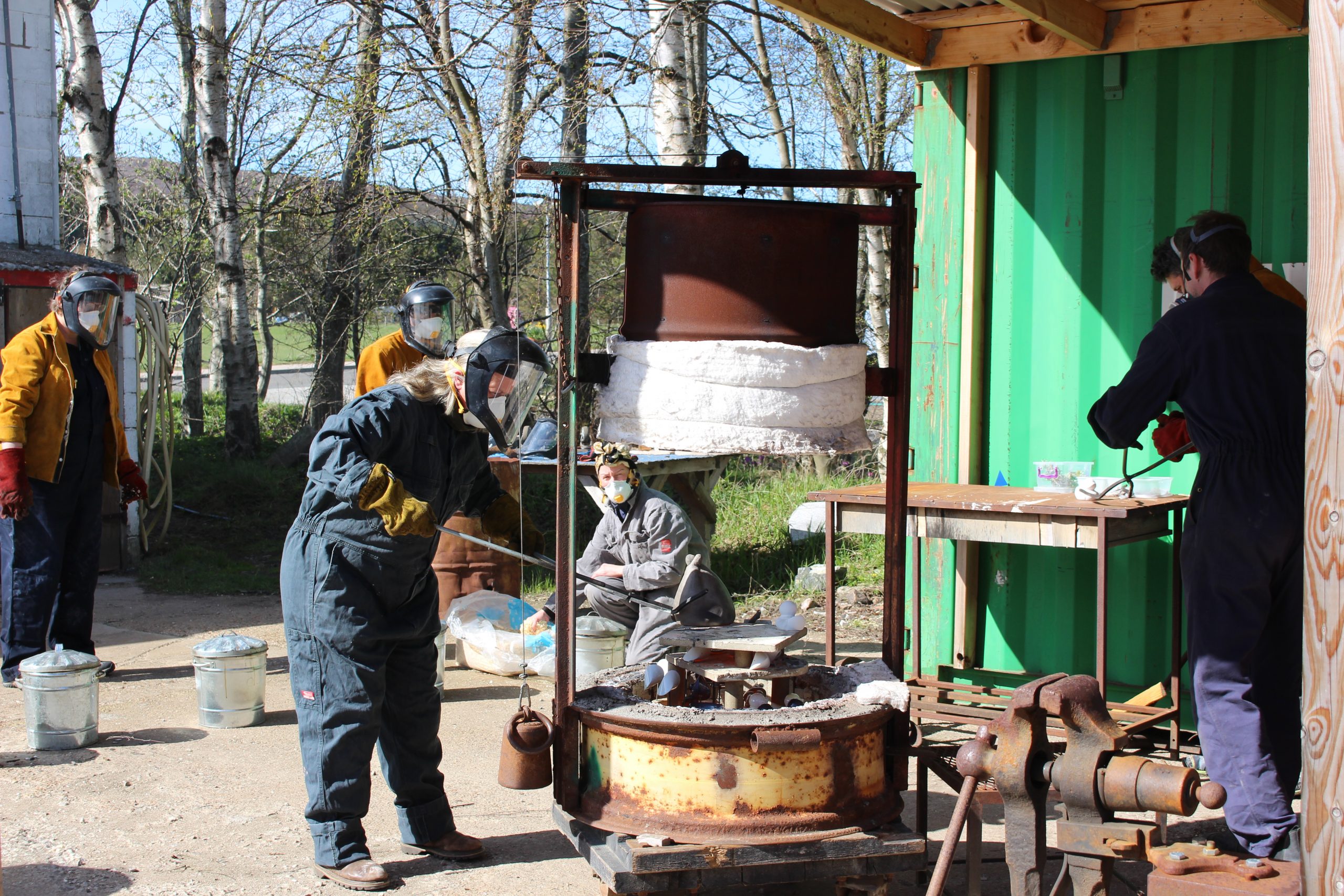
I’ve recently taken part in Clay North East, which was a great experience—just being part of that wider ceramics community and putting work out there.
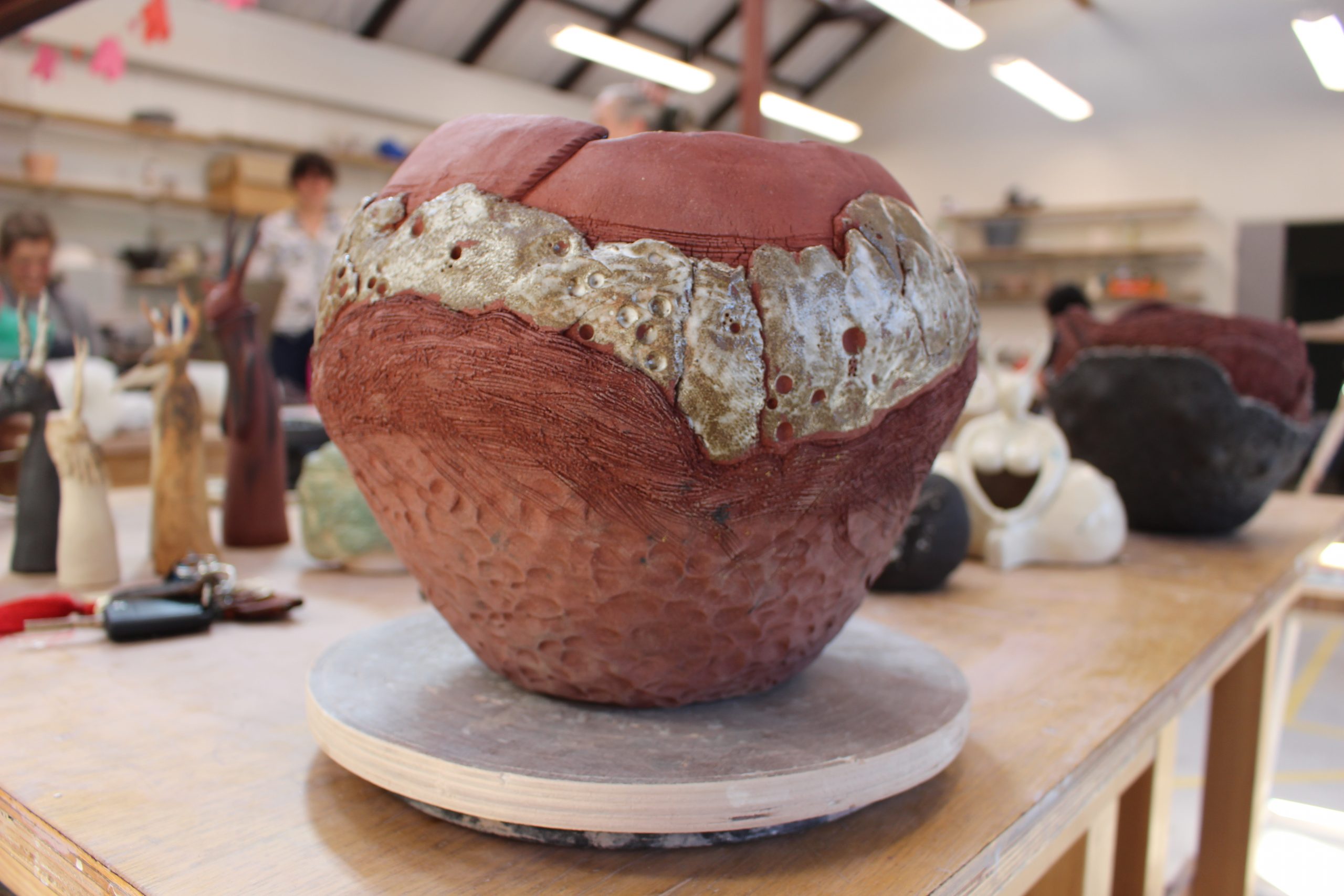
In the studio, I’m working across both functional and sculptural pieces, with a lot of carving and mark-making coming through from landscape, weather, and memory.
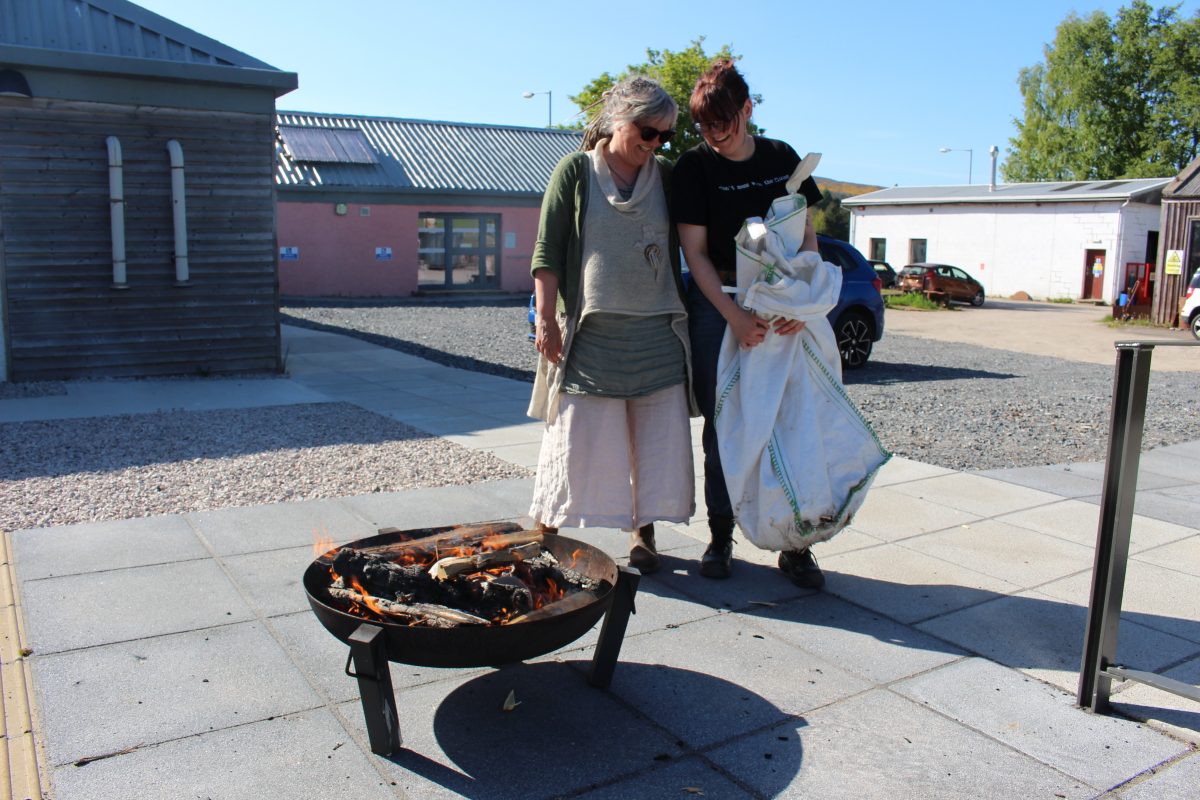
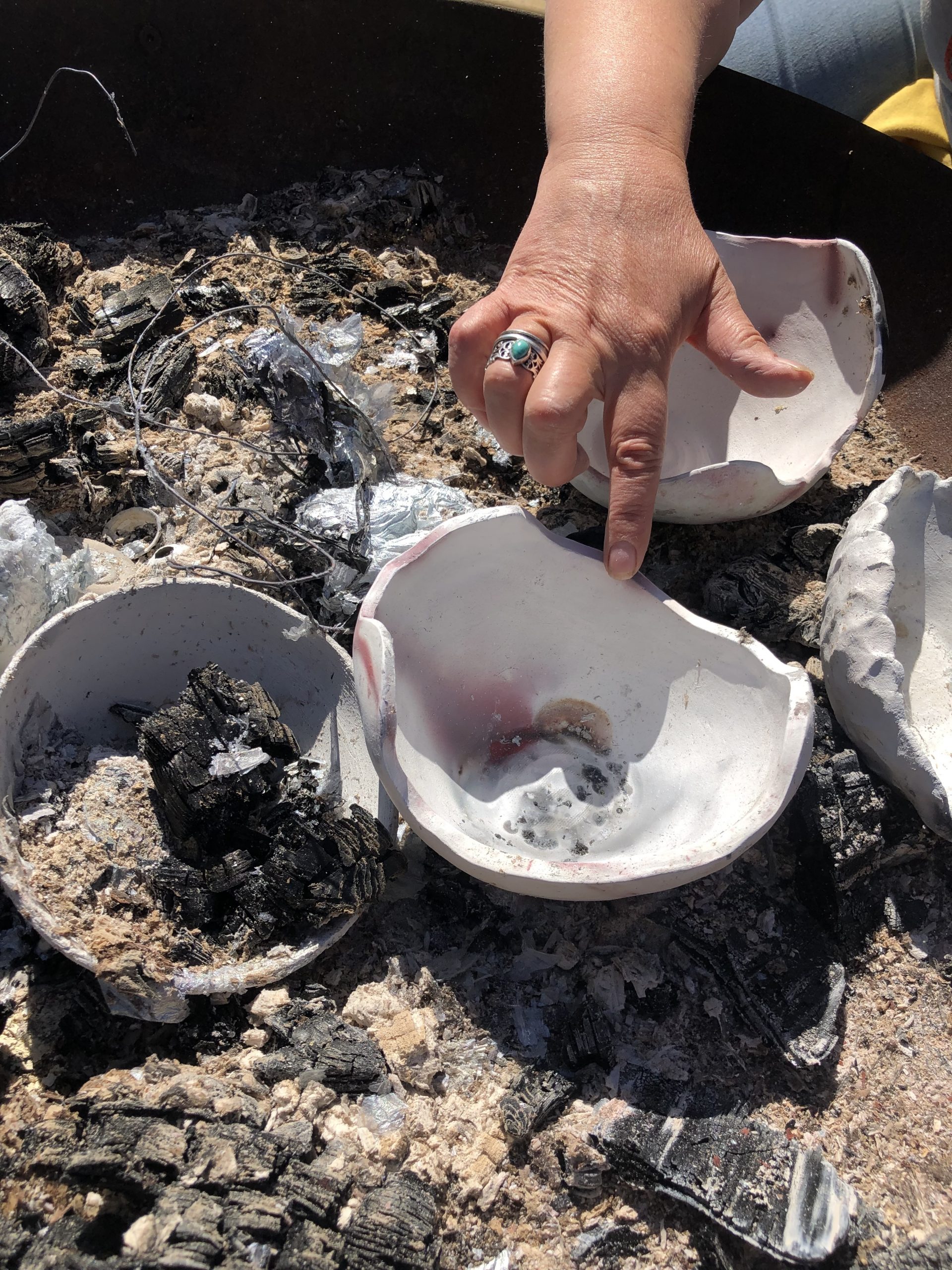
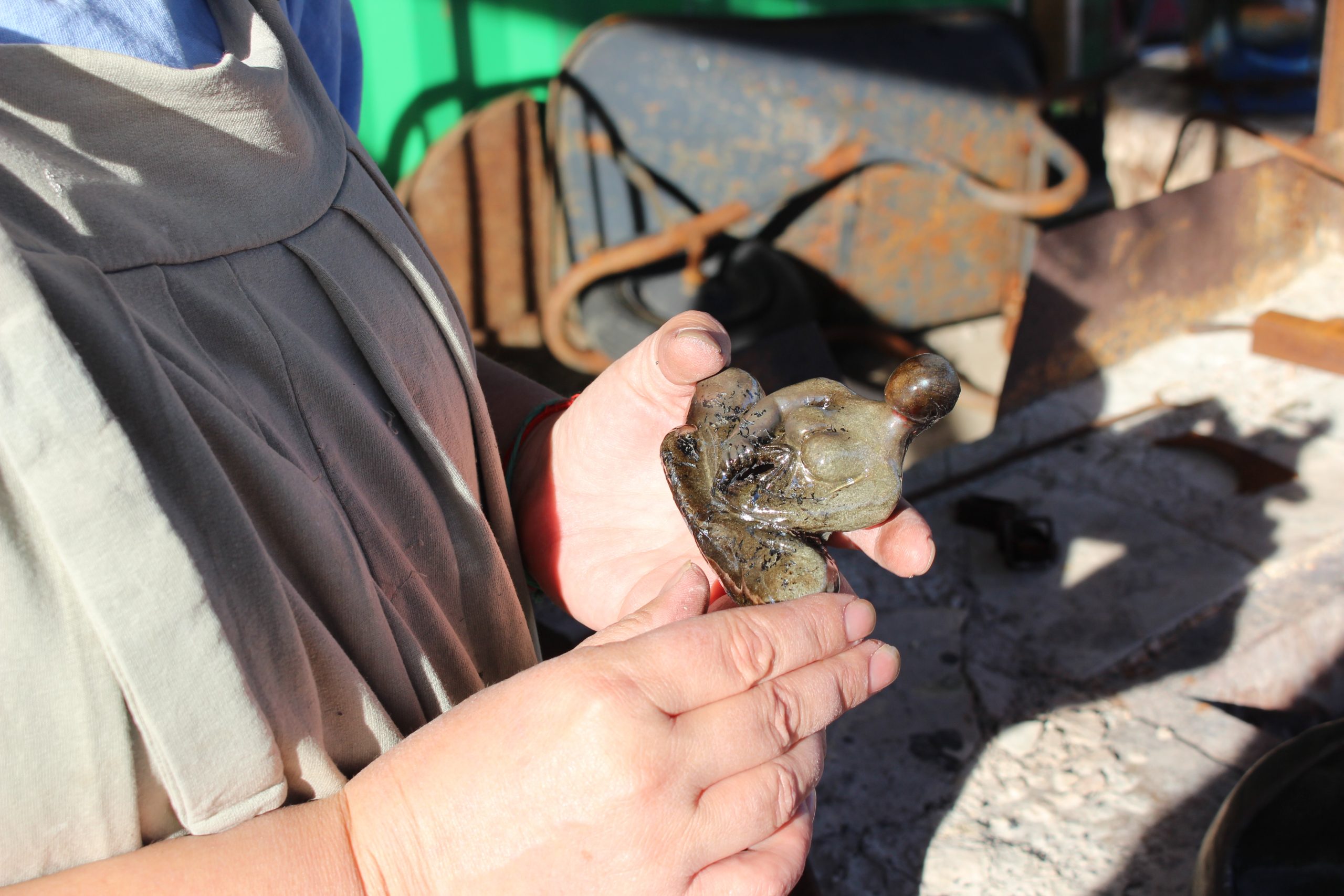
I’ve been playing with raku firing as well, which I love—it’s immediate, unpredictable, a bit wild.
I’m now experimenting more with process-led glazing and form, creating my own glazes and working with a range of different clays, including wild clay. That side of things has really opened everything up for me.
SSW has given me the opportunity to properly explore and expand my knowledge, skills and confidence. Without that, I think I’d still be hand-building smaller pieces and wouldn’t have had the confidence to step into other processes.
This year I’m really excited to start having a go at throwing as well—it feels like the next step in my learning.
More and more, I’m leaning into storytelling—Scottish folklore, land memory, and those in-between, slightly mythical forms.
Can you share some of what you are working on outside of SSW?
Outside the studio, I deliver bespoke sound, foraging and wellness experiences.
That didn’t happen overnight though. Clay came first. Working with clay gave me the self-belief and confidence to start offering my other skills again—when I was ready.
I’m still supported through disability, but I’m now building my own self-employed business around my clay and these wider offerings. It means I can manage my wellbeing while still doing something that feels meaningful and useful.
More recently, I’ve started offering clay workshops as well, bringing that into the mix.
One area I’m really interested in is an archaeological study into spinning whorls—combining clay, history, function and wellbeing. It’s about slowing people down, getting them working with their hands, and connecting them into something older and more grounded.
Accessibility is a big part of what I do. I was supported into this, so being able to now offer that to others matters a lot.
I also run “Birthing the Goddess” workshops, which are more intuitive, creative sessions—working with clay to create personal, talismanic forms.
Everything kind of feeds into everything else.
Where can people find out more about your work?
You can find more about what I do through Roots and Cadence online and on Instagram.
I’m currently developing a body of work that brings together ceramics, storytelling and land-based practice—so that’s all continuing to evolve.